Blossom Master: Tile Matching
- 4.8
- Rating
- 1.00M
- Installs
- Free
- Price
 Analysis by App-foxy
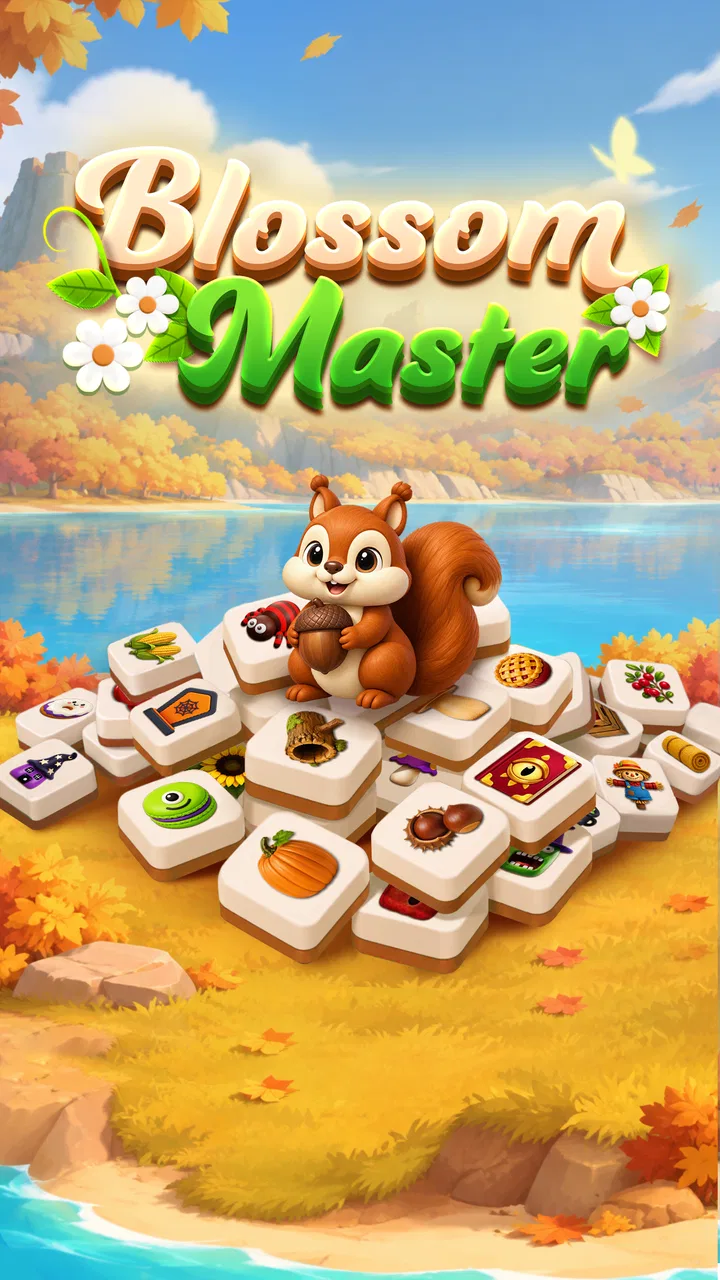
I found Blossom Master: Tile Matching easy to understand within a few seconds, but it still has enough visual planning to keep a short break from feeling completely automatic. This is a free board game from LIHUHU PTE. LTD. built around arranging and matching blossom-themed tiles. The central idea is familiar, yet the presentation gives it a softer, more relaxed identity than a traditional board puzzle.
My first impression was that it is aimed at people who want a calm matching game rather than a complicated strategy title. You can pick it up without studying a rulebook, play for a little while, and put it down without losing the thread of a long story. That makes it a natural fit for a commute, a waiting room, or the few minutes before bed. It is also suitable for Everyone, so the basic concept is approachable for a broad audience.
The important question is whether the simplicity becomes boring. In my experience, that depends on what you want from a board game. If you enjoy sorting patterns, scanning a crowded layout, and making careful choices before the board becomes difficult, this has a clear appeal. If you need deep competition, a campaign, or constant new mechanics, the gentle matching format may feel limited.
You May Also Like

 Blood Strike: 2.5 Anniversary
Blood Strike’s Loadouts Turn Every Drop Into a Tactical Gamble
A close look at Blood Strike’s custom loadouts: how fast access to signature weapons reshapes its battle royale rhythm, rewards preparation, and narrows the gap between fights.

 Pandora - Music & Podcasts
Pandora’s Music Is Easy to Start, but Harder to Recover
Pandora’s strength is its low-effort path from a seed to a station. Its weak spot is how much confidence it asks you to place in connection, setup, and quiet recovery.

 8 Ball Pool
 Is Built on Rivalries, Rematches, and Routine
A close look at the rivalries, rematches, shared routines, and unanswered safety questions that turn a quick pool match into a persistent mobile community.

 Samsung Music
’s Quiet Strength Is Playing What You Already Own
Its reach comes less from spectacle than from dependable access to a personal library. That simplicity is both the app’s strongest retention engine and its ceiling.

 AccuWeather: Weather Radar
AccuWeather Review: A Quick, Clear Forecast for Everyday Decisions
For everyday plans, the best forecast is the one you can understand quickly. AccuWeather makes rain timing, radar, and local conditions easy to act on, with a few trade-offs.

 Hill Climb Racing
Why Hill Climb Racing Still Turns Crashes Into One More Run
A tiny car, a bumpy hill and one more upgrade: Hill Climb Racing keeps resurfacing because its simple chaos makes every near-miss feel personal.
More From Our News Desk



How the matching design feels in everyday play
I find the matching design most useful when I treat each board as a small visual problem, not a race to clear whatever triple catches my eye first. That shift makes the play feel more deliberate and helps me notice how one choice can narrow the options left for later. It also sets up the next part of the experience: how the game’s steady feedback shapes the pace of an ordinary session.
Quick to start, with more planning than the rules suggest
The basic task is straightforward: match three tiles and continue clearing the board. That simplicity is useful because there is almost no learning barrier. I do not need to remember a collection of special controls or understand a complex menu before playing. The challenge comes from deciding which group to remove first and how to avoid blocking useful combinations later.
That small decision-making layer is where the game earns its place among tile-matching games. A careless move can leave an awkward arrangement, while a more patient scan can reveal a better sequence. It is not the same kind of planning as chess or a serious tactics board game, but it does reward attention. I found myself looking beyond the obvious match instead of tapping the first available option every time.
The blossom theme also changes the mood. Rather than presenting the board as a harsh grid of identical symbols, it gives the matching task a decorative, garden-like character. That will not transform the rules, but it makes repeated sessions feel less stark than many minimalist puzzle alternatives. The visual identity is doing useful work: it supports the relaxed tone without requiring a story or a large cast of characters.
Where the pace feels strongest
The best use case is a short session with a clear stopping point. I can imagine opening it while waiting for food, playing during a television commercial break, or using it as a low-pressure way to switch off after work. Because the main interaction is so direct, the game does not demand the same mental preparation as a longer board strategy title.
There is also a practical benefit for people who dislike games that punish them for leaving suddenly. A tile puzzle is naturally easier to fit around interruptions than a real-time match. If a child needs attention, a delivery arrives, or I simply decide to stop, I am not abandoning a team or ruining someone else’s session. That makes it more convenient than competitive multiplayer board games for everyday use.
At the same time, I would not describe every moment as equally relaxing. As the arrangement becomes less obvious, the act of searching for a safe match can become surprisingly absorbing. The calm artwork may suggest a passive experience, but the board still asks me to watch the remaining spaces carefully. For me, that balance is a strength: the game is easy to enter without being completely mindless.
Useful habits for avoiding unnecessary mistakes
My most useful adjustment was to stop treating every visible triple as an immediate instruction. I first scan the whole board, identify tiles that appear to have fewer future options, and then consider whether removing them will expose a better route. This is especially helpful when several matches look equally attractive. The obvious move is not always the move that leaves the cleanest board.
A second habit is to use the edges as reference points. When the layout becomes visually busy, I mentally divide it into smaller areas instead of trying to process every blossom at once. That reduces the chance of overlooking a match and makes the board feel less demanding. It is a simple technique, but it gives the game more depth than the short description might suggest.
I also recommend playing with a deliberate rhythm rather than tapping rapidly. Fast tapping feels efficient when the board is clear, but it can encourage impulse decisions when the options narrow. A pause of a few seconds is often enough to notice a safer sequence. This is one of the reasons I see the game as a light puzzle rather than a pure reflex exercise.
What happens during longer or heavier sessions
For occasional play, the design feels naturally manageable. The more relevant test is what happens when I keep returning to it for a longer stretch. Repeated matching can become visually repetitive, particularly for players who expect each session to introduce a major new rule. The same core action remains the center of the experience, so its longevity depends heavily on how much you enjoy refining your choices within that framework.
That trade-off is common in focused board games, but it matters here because the presentation is so approachable. A newcomer may appreciate the consistency, while an experienced puzzle player may want more variation sooner. I would therefore treat this as a dependable casual game rather than a single title intended to replace every other puzzle on a phone.
Long sessions can also change the way I notice the interface. At the beginning, the decorative style is pleasant and the board is easy to read. After repeated rounds, I become more aware of the repeated visual language. That is not a flaw for short play, but it is a reason I would alternate it with another game instead of making it my only daily pastime.
Stability, recovery, and what I would expect from the app
Blossom Master: Tile Matching is currently listed as version 1.8.1, which suggests that the app has already gone through multiple rounds of refinement rather than being presented as an untouched first release. It arrived on October 31, 2024, and its broad adoption is reflected in more than a million installs. Those details do not guarantee a perfect experience on every phone, but they make it easier for me to approach the game as an established casual option.
In practical terms, I value a game like this when it lets me return to a puzzle without unnecessary ceremony. A short board session should not feel like a major commitment, and a casual title benefits from a simple recovery path after an interruption. I would still avoid assuming that every device behaves identically, especially when Android versions and hardware vary, but the game’s focused format is less demanding in concept than a large action game with constant animation and online competition.
That distinction matters when choosing what to install. A board puzzle does not need to compete with a console-style game on spectacle. Its performance value comes from being easy to open, easy to understand, and comfortable to revisit. If those qualities are what I want, the modest scope works in its favor. If I am looking for a visually ambitious game that pushes my phone, this is clearly the wrong category.
Device fit and the cost of keeping it free
The minimum operating-system requirement is Android 7.0, so the game is not restricted to only recent Android phones. That is useful for readers who keep an older device as a backup or prefer not to upgrade frequently. Still, an operating-system requirement is only one part of the experience. Screen size, touch accuracy, available storage, and general device condition can all affect how comfortable a tile puzzle feels.
On a smaller screen, I would pay closer attention to whether neighboring blossoms are easy to distinguish. Matching games depend on quick visual recognition, so a cramped display can make the board feel more tiring even when the rules are simple. A larger phone or tablet may make scanning easier, especially for someone with less comfortable eyesight. This is one situation where the same game can feel more relaxed on one device than another.
The game is free to download, but it includes in-app purchases ranging from $1.99 to $99.99 per item. That is the point I would discuss with anyone who plans to let a child play. The Everyone rating describes the general content, not how a household wants to manage spending. I would review purchase controls before handing over the device, and I would not assume that a free installation means every optional element has no cost.
For adults, the sensible approach is to treat purchases as optional until the basic loop has earned your time. The matching itself is the reason to install the game, so I would first decide whether I enjoy the board design without spending anything. If I find myself considering a purchase only because I feel pressured to continue, that is a good moment to pause rather than pay automatically.
How it compares with familiar alternatives
Compared with classic match-three games, this title feels more like a board puzzle built around selecting groups of tiles than a fast sequence of cascading effects. That difference makes it better for players who prefer examining a layout before acting. Someone who enjoys rapid combos, colorful chain reactions, and constant visual fireworks may find a conventional match-three game more exciting.
Compared with solitaire-style board games, the appeal is also different. Solitaire rewards arranging cards under a recognizable set of constraints, while this game focuses on visual grouping and the consequences of clearing tiles. I would choose the blossom puzzle when I want a more image-driven challenge and solitaire when I want a slower, more rule-bound card routine.
It also sits apart from competitive board apps. There is no need to compare my decisions with another person in real time, which removes pressure and makes it suitable for solitary play. The downside is that players who thrive on rankings, live opponents, or social bluffing may not find enough interpersonal tension here. The right choice depends less on the word “board” and more on whether I want quiet pattern recognition or competition.
Who will enjoy it, and who should skip it
I would recommend it to casual puzzle fans, people who like floral visual themes, and anyone who wants a game that can be played in short bursts. It is particularly suitable for a player who enjoys making small plans and improving through observation rather than mastering complicated controls. The Everyone rating also makes it approachable as a family-friendly option, provided an adult handles the purchase settings when necessary.
I would be more cautious about recommending it to players who need a strong narrative reason to keep going. There is no benefit in choosing a focused tile game if what you really want is character development, exploration, or a large strategic campaign. I would also steer away from it if repetitive matching loses its charm quickly. The game’s strength is concentration within a narrow format, not constant reinvention.
It is not my first choice for a serious two-player board experience either. If I want to challenge a friend directly, a dedicated multiplayer board game will usually offer more meaningful interaction. Blossom Master is better when I want control over the pace and do not want another person’s schedule or skill level to determine whether a session is enjoyable.
My final view after weighing the compromises
The strongest part of this game is its balance between accessibility and small-scale planning. I can understand the objective immediately, yet I still have reasons to slow down and consider the order of my moves. The blossom presentation gives the familiar format a distinct mood, while the Android 7.0 minimum keeps it relevant to people using older compatible devices.
The limitations are just as clear. The central action can feel repetitive during extended play, and players looking for competition or major mechanical variety will probably outgrow it. The in-app purchase range also deserves attention, especially on shared devices. These are not reasons to reject the game outright, but they are important when deciding whether it fits a particular routine.
The current average rating is 4.8 from around 4.9 thousand ratings, with 318 written reviews, so the public response is notably positive. I see that enthusiasm as understandable, although a rating cannot replace personal preference. A calm tile board will naturally appeal more to someone who likes measured puzzles than to someone searching for speed and spectacle.
My recommendation is to try it as a focused, low-pressure board game rather than expecting an endless all-purpose entertainment app. It works best when I give each layout a little attention, play in manageable sessions, and keep purchases under control. For a quiet break, an older compatible Android phone, or a simple puzzle habit, Blossom Master: Tile Matching is an appealing free starting point. For deep strategy, social competition, or dramatic progression, I would choose a different kind of game.
FAQs for Blossom Master: Tile Matching
01What is Blossom Master: Tile Matching, and how does it work?
Blossom Master: Tile Matching is a puzzle game that challenges players to match tiles with similar patterns or colors. The objective is to clear the board by pairing tiles, which enhances problem-solving skills and provides hours of engaging gameplay. The game offers various levels and modes to keep you entertained and challenged.
02Is Blossom Master: Tile Matching free to play, or are there in-app purchases?
The game is free to download and play, but it includes in-app purchases for additional features such as extra lives, power-ups, and ad removal. These purchases are optional, allowing players to enjoy the full game experience without spending money, though they can enhance gameplay for those interested.
03What are the system requirements for installing Blossom Master: Tile Matching?
Blossom Master: Tile Matching is compatible with most Android and iOS devices. For Android, a minimum version of Android 5.0 is required, while iOS users need at least iOS 10.0. Ensure you have enough storage space and a stable internet connection for the best performance and updates.
04Does Blossom Master: Tile Matching require an internet connection to play?
While an internet connection is needed for downloading the game and accessing some features, such as leaderboards and in-app purchases, Blossom Master: Tile Matching can be played offline. This allows you to enjoy the game anytime, anywhere, without worrying about connectivity issues.
05Are there any age restrictions for playing Blossom Master: Tile Matching?
Blossom Master: Tile Matching is suitable for players of all ages. It has a user-friendly interface and engaging gameplay that is appropriate for children and adults alike. Parents can feel confident allowing their children to play, as the game contains no inappropriate content.
Pros
- Engaging and colorful graphics.
- Intuitive and simple controls.
- Variety of challenging levels.
- Regular updates with new content.
- Offline play available.
Cons
- In-app purchases can be pricey.
- Ads may interrupt gameplay.
- Limited lives can be frustrating.
- Some levels feel repetitive.
- Occasional bugs and crashes.

Blossom Master: Tile Matching
Gallery